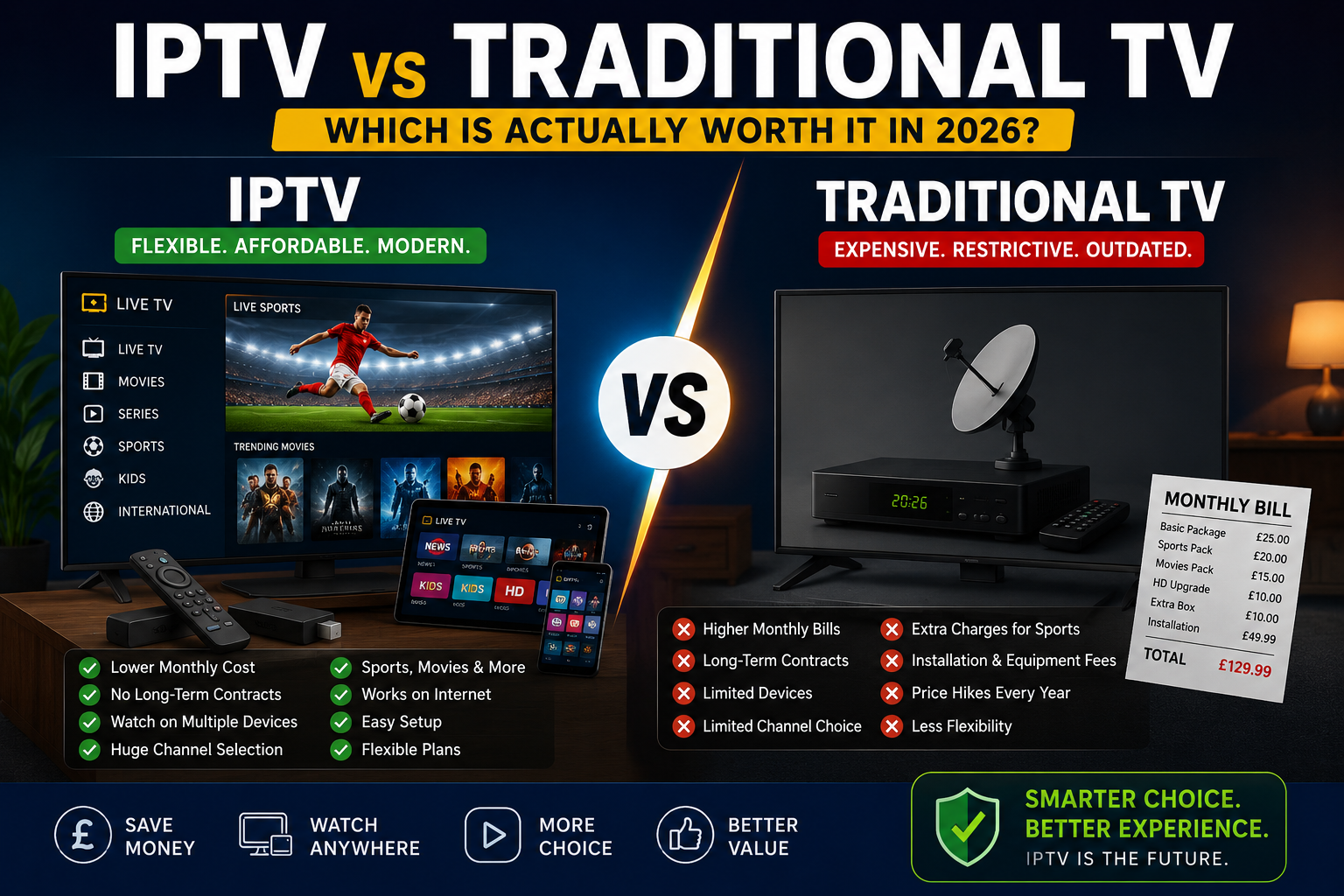
If you are comparing IPTV vs cable vs satellite UK, you are asking the right question. In 2026, UK viewers have more ways to watch television than ever before. Some households still prefer traditional television packages, while others want a more flexible setup that works across Smart TVs, Firestick devices, Android boxes, phones, and tablets. Because of that, the decision is no longer just about channels. It is also about price, convenience, flexibility, device support, and overall viewing experience.
For many people, the real issue is simple. Traditional cable and satellite services still feel familiar, yet they can also feel rigid. On the other hand, IPTV often feels more modern because it fits the way people already consume content today. Viewers want live channels, movies, series, app-based access, and easy setup without making the whole process harder than it needs to be.
That is exactly why this comparison matters. Instead of following old viewing habits automatically, more people now want to understand which option truly fits their home, budget, and daily routine. If you are already looking for a more flexible setup, you can start with this IPTV UK page. Also, if you want to learn how to install it on your device, read how to set up IPTV on Firestick in the UK and how to install IPTV on Smart TV in the UK.
What Is IPTV?
Before comparing all three options, it helps to define them clearly.
IPTV stands for Internet Protocol Television. In simple language, that means television content delivered through the internet rather than through older broadcast methods. As a result, IPTV usually works through apps, streaming devices, and internet-connected televisions instead of relying on a fixed old-style setup.
That does not mean IPTV is complicated. In fact, one of the main reasons it has become more popular is because it can feel easier and more flexible once it is installed properly. Instead of being limited to one type of box or one room, users can often watch on different devices depending on their setup.
If you are still new to the topic, you should also read what is IPTV and how does it work in the UK. That article explains the basics in a beginner-friendly way.
What Is Cable TV?
Cable television is a more traditional type of subscription TV service delivered through fixed infrastructure. For many years, this was one of the most common ways to get a large channel package in the home. It often comes as part of a larger home package that may include internet and other services.
The main advantage of cable is familiarity. Many households already understand how it works, and some users prefer a standard package with a clear monthly structure. However, cable can also feel more limited than newer viewing options, especially when it comes to flexibility, device choice, and overall control.
What Is Satellite TV?
Satellite television is another traditional option. Instead of using internet delivery, it relies on dish-based broadcast transmission. Many households have used satellite for years because it has long been seen as a reliable way to receive a wide selection of channels.
Still, satellite can feel more fixed and less flexible in 2026. It is often tied to a more traditional TV environment, while modern viewers increasingly want app-based access, streaming-style navigation, and viewing across multiple screens.
Why People Are Switching Their TV Setup
The biggest reason people compare IPTV vs cable vs satellite UK today is that viewing habits have changed. Years ago, people mainly watched television in one room on one screen through one provider. Now the situation is different. Many viewers move between the living room TV, bedroom screen, phone, tablet, or streaming device. Therefore, the best TV option is no longer only about who provides the most channels.
Today, people care more about:
- flexibility
- ease of installation
- app support
- device compatibility
- monthly value
- smoother access to both live and on-demand content
That is why IPTV gets so much attention. It fits naturally into a more connected and app-based home environment.
IPTV vs Cable vs Satellite: The Main Difference
The simplest way to understand the difference is this:
- IPTV uses internet-based delivery
- Cable uses fixed wired TV infrastructure
- Satellite uses dish-based signal delivery
Although that sounds basic, the real difference appears in daily use. IPTV feels more like a modern digital platform. Cable and satellite often feel more like traditional television systems. That difference shapes everything from device choice to setup style to user experience.
1. Flexibility
Flexibility is one of the strongest reasons many viewers now prefer IPTV.
With IPTV, users often have more freedom in how they watch. They can use Smart TVs, Firestick devices, Android boxes, phones, tablets, and other supported devices depending on the service and player they choose. That makes IPTV a better fit for people who do not want to depend on one fixed screen or one rigid setup.
Cable and satellite can still work well for viewers who prefer the old style of television. However, they usually feel less flexible. In many cases, they are built more around a primary television setup rather than a multi-device lifestyle.
So if flexibility matters most to you, IPTV usually has the advantage.
If you want to build that kind of setup, visit this best IPTV UK page first.
2. Installation and Setup
Another important comparison point is setup.
Cable and satellite services often feel more traditional from the beginning. Some households like that because it feels familiar. However, it can also mean a more fixed process with a more provider-controlled environment.
IPTV is different. It often starts with a streaming device, Smart TV app, or Android-based setup. Once installed correctly, it can be much more convenient. You simply use the app, enter the login details, and start watching.
That is why many people now prefer IPTV. It gives them more control. Instead of relying on an older setup model, they can use a television environment that feels closer to the apps and devices they already use every day.
If your main goal is easy installation, our Firestick IPTV UK guide and Smart TV IPTV UK guide are the best next steps.
3. Device Compatibility
This is one of the biggest gaps between older television systems and modern IPTV setups.
IPTV is designed for today’s digital environment. That means it can work well across multiple device types, including:
- Smart TVs
- Firestick devices
- Android TV boxes
- phones
- tablets
- other internet-connected screens
Traditional cable and satellite setups often feel more tied to a single main television environment. That is fine for some homes, but it is less attractive for users who want to move between devices or set up different screens more freely.
So if you want your television setup to match a modern connected household, IPTV usually makes more sense.
4. Viewing Experience
The viewing experience matters more than many people expect. Even if a service looks good on paper, it still has to feel simple and enjoyable when used every day.
Cable and satellite still appeal to viewers who like a traditional TV flow. For some people, that format feels comfortable because it is what they have always known.
However, IPTV usually feels more modern. With a good app and a reliable setup, users can enjoy categories, favourites, search, guide navigation, movies, series, and live TV in one place. That type of experience often feels cleaner and easier for viewers who are already used to streaming platforms and app-based interfaces.
If you want to choose a player that improves the overall experience, read best IPTV apps for Firestick and Android in 2026.
5. On-Demand Content
This is another area where IPTV often feels stronger.
Traditional television services are usually built around scheduled viewing. While they may include additional features depending on the setup, the overall structure still tends to revolve around classic live television habits.
IPTV, by contrast, often feels better suited to modern viewing preferences because it combines live TV with a more app-based content environment. Many users like the feeling of having both live channels and on-demand content within one setup.
That matters because modern viewers do not always want to wait for programming schedules. They want more control over when and how they watch.
6. Cost and Value
Price is one of the biggest reasons people search for IPTV vs cable vs satellite UK.
Traditional television packages can feel expensive, especially when users pay for large bundles but only watch a small portion of them. In addition, older-style setups may not always feel worth the price when compared with a more flexible app-based alternative.
IPTV is often attractive because people see it as a more modern-value option. Instead of paying for a rigid structure, they prefer something that feels easier to manage, simpler to install, and more aligned with how they already consume entertainment.
Of course, value is not only about the number on the monthly bill. It is also about what you get in return. If a setup gives you easier access, smoother navigation, better device freedom, and a more practical everyday experience, many viewers will see that as better overall value.
If that is what you are looking for, this IPTV subscription UK page is the right place to continue.
7. Contracts and Long-Term Commitment
This is where many viewers begin to feel frustrated with traditional TV systems. They do not always want to feel locked into one long-term setup. Instead, they prefer something lighter and easier to manage.
Traditional cable and satellite services are often associated with a more fixed structure. That appeals to some households, but it can feel restrictive for users who want a modern and more adaptable viewing arrangement.
IPTV usually feels different because the setup itself is more app-based and user-controlled. That creates a perception of flexibility, which is one of the key reasons many people now explore IPTV instead of sticking to traditional television packages.
8. Convenience for Modern Homes
In 2026, convenience matters more than ever.
People do not want a TV setup that feels outdated or unnecessarily rigid. They want something that works with the devices already in the home. They want content to load through familiar interfaces. They want to switch from one room to another without feeling tied to a single television system.
That is where IPTV has a strong edge. It fits naturally into a modern home with Smart TVs, streaming sticks, Android devices, and connected screens. Cable and satellite can still serve their purpose, yet they often feel more tied to a previous era of viewing habits.
Therefore, for many users, the convenience factor alone makes IPTV more attractive.
9. Which Option Is Best for Families?
This depends on the type of household.
A family that prefers one main television, one familiar interface, and one standard routine may still feel comfortable with a traditional setup. However, a family that watches across different rooms and devices may find IPTV more practical.
That is because IPTV supports a lifestyle where people want different viewing options in different places. One person may want the main TV, while another uses a tablet or a secondary screen. As viewing habits become more personalised, IPTV becomes more appealing.
10. Which Option Is Best for Younger Viewers?
Younger viewers are usually more comfortable with app-based systems and streaming environments. Because of that, IPTV often feels more natural to them than traditional cable or satellite setups.
They are already used to navigating content with apps, menus, categories, search, and on-demand sections. Therefore, the IPTV experience fits their habits more closely.
Traditional systems can still work, but they often feel less aligned with the way younger audiences watch television today.
11. Which Option Is Better for Simplicity?
At first glance, some people assume cable or satellite must be simpler because they are older formats. However, that is not always true. In many cases, IPTV can feel simpler once it is set up properly.
Why? Because it runs through devices and systems people already understand. Smart TVs, Firestick devices, Android interfaces, and modern apps all feel familiar to many users. As a result, the learning curve can actually be smaller than people expect.
That is especially true when the setup is combined with a good player app and a clear guide. For new users, our what is IPTV UK guide and best IPTV apps 2026 guide make the next steps easier.
12. Which One Feels Most Future-Proof?
This is where IPTV usually wins.
Cable and satellite belong to an older model of home television. They still work, and some households still prefer them. However, IPTV feels closer to where television is going rather than where it has been.
The future of viewing is clearly moving toward:
- app-based navigation
- internet-based delivery
- connected devices
- flexible screen usage
- personalised viewing habits
That is why IPTV often feels more future-ready. It fits the direction modern entertainment is already taking.
Pros and Cons of IPTV
Pros
- more flexible for modern homes
- works with multiple device types
- easier to match with app-based viewing habits
- combines live TV and on-demand convenience
- often feels more modern and practical
Cons
- depends more on internet quality
- needs the right app and proper setup
- can feel confusing to complete beginners at first
Pros and Cons of Cable
Pros
- familiar to many households
- simple traditional TV structure
- comfortable for users who prefer the old style
Cons
- less flexible
- more fixed environment
- often feels less modern for multi-device viewing
Pros and Cons of Satellite
Pros
- familiar and established
- suitable for users who prefer traditional television routines
Cons
- feels less flexible in 2026
- not as naturally suited to app-based home viewing
- usually less aligned with modern connected device use
Final Verdict: Which Is Best in the UK?
When comparing IPTV vs cable vs satellite UK, the best option depends on what kind of viewer you are. If you want a traditional, fixed, old-style television setup, cable or satellite may still feel comfortable. However, if you want flexibility, modern device support, app-based access, and a setup that matches how people watch content today, IPTV is usually the stronger choice.
That is why so many users now move toward IPTV. It feels more convenient, more adaptable, and more in tune with current viewing habits. Instead of being tied to older television models, users get a setup that works across the devices they already use and understand.
So for most modern households, IPTV is the option that makes the most sense in 2026.
If you want to explore your next step, start with this best IPTV service UK page. Then continue with how to set up IPTV on Firestick in the UK or how to install IPTV on Smart TV in the UK depending on your device.
Frequently Asked Questions
Is IPTV better than cable in the UK?
For many modern users, yes. IPTV often feels more flexible and better suited to app-based viewing across multiple devices.
Is IPTV better than satellite in 2026?
In many cases, yes. IPTV usually feels more modern, especially for viewers who want flexibility and easier access across different screens.
Why do people choose IPTV instead of traditional TV packages?
Most people choose IPTV because they want a more flexible setup, better device compatibility, and a viewing experience that matches modern habits.
Is cable still worth it in the UK?
Cable can still suit households that want a traditional television structure, but it often feels less flexible than IPTV.
Is satellite outdated?
Not fully, but it can feel less suited to today’s viewing habits, especially for users who want app-based flexibility.
What should I read next?
The best next article after this one is:
Is IPTV Legal in the UK? Everything You Need to Know
If you want, I’ll write the next article in the same format with the homepage links kept in naturally.